
Singapore’s Carbon Services Sector Gains Ground, but Talent Shortage Threatens Long-Term Growth
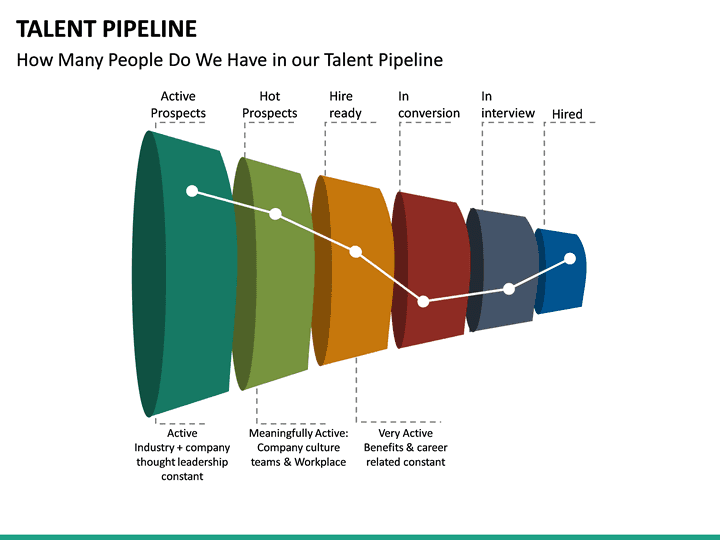
Singapore is positioning itself as a leading hub for carbon services in Asia, home to more than 150 firms involved in carbon project development, credit trading, sustainability advisory, and emissions monitoring and verification. This is double the number from 2021—evidence of rapid momentum in a sector considered key to the Republic’s green economic strategy.
However, beneath this impressive growth lies a significant vulnerability: a shortage of qualified and committed talent. Industry leaders and policymakers warn that unless this gap is addressed, Singapore’s ambitions in the carbon markets may struggle to take root at scale.
Beyond Qualifications: The Grit Gap
For Alvin Lim, CEO of local carbon project developer Climate Bridge International, finding the right people isn’t just about credentials. “We interview bright individuals who’ve taken courses and know the theory,” he said. “But very few are ready to spend weeks in rural Ghana or Kalimantan to monitor a carbon offset project on the ground.”
Most of Singapore’s approved carbon projects are likely to be hosted in remote areas of the Global South. According to Lim, success in this field demands not just knowledge but grit—resilience, adaptability, and the ability to operate under challenging conditions with minimal support.
“Some candidates see this as an adventure. Others see it as a hardship. We need the former,” he added.
A Hybrid Skill Set Few Possess
Carbon services is a field where science meets finance, policy, and technology. Hiring managers often find it difficult to source candidates who bring together expertise in environmental science, financial analysis, and regulatory knowledge.
“Someone who is ‘off-the-shelf’ ready? That profile doesn’t really exist,” said Tommy Ricketts, CEO of BeZero Carbon, a carbon ratings agency. “And if they do, they’re prohibitively expensive.”
The shortage is even more acute when it comes to local professionals. Ricketts noted that new entrants and Singapore-based talent still represent the smallest share of the workforce in this emerging sector.
Building Talent from Within
Recognizing this bottleneck, several institutions are moving to build a domestic pipeline of talent. The National University of Singapore (NUS) has launched a $10 million initiative to accelerate education and research in sustainability, including a new professional certificate in carbon services and trading under its NUS Sustainability Academy.
In tandem, SkillsFuture Singapore unveiled a national framework in May outlining the career pathways and competencies needed in the carbon services space. The goal: equip mid-career professionals and graduates with the tools to pivot into the sector by leveraging their existing skill sets.
Enterprise Singapore’s director of trade, Ivan Tan, emphasized the importance of openness to global talent in the early years of the sector’s growth, but acknowledged that building local capacity is now a priority.
Sustainability as a Lens, Not a Discipline
For those aspiring to break into the carbon markets, the message from industry veterans is clear: don’t start from scratch—start from what you know.
“Sustainability isn’t a field in isolation—it’s a way of applying your core expertise,” said Izzat Hamzah, Asia-Pacific lead for environmental commodities at 3Degrees. “Whether you’re trained in law, economics, engineering, or computer science, you can apply that lens to carbon and climate.”
The ideal sustainability professional, he argued, is a “jack of all trades, master of some”—someone with deep knowledge in one discipline, yet broad enough to understand the interconnected systems at play.
New Frontiers in Carbon Credit Innovation
As the sector matures, so too does the research behind it. At the NTU Asian School of the Environment, PhD student Zhang Yiwen is studying the carbon absorption potential of volcanic rocks scattered across rice paddies in southwest China.
The project, led by Professor Simon Redfern, explores whether crushed rocks can serve as an alternative method of long-term carbon capture—one that taps into the lithosphere, which stores carbon far longer than forests or conventional nature-based solutions.
Such innovations could diversify the types of carbon credits available on the market and unlock new revenue streams for project developers.
Real Impact, Real Stakes
The appeal of carbon markets isn’t just theoretical. Michael Alexander, a mathematical finance graduate and now research analyst at the NUS Sustainable and Green Finance Institute, found his calling after visiting a peatland conservation project in Kalimantan.
Witnessing the tangible impact of carbon finance on biodiversity and local livelihoods convinced him to pursue a career in the space.
“What troubled me was how difficult it was for good projects to get fair financing,” he said. “It pushed me to work on building more equitable carbon market structures.”
The Road Ahead
Despite an uncertain global economic climate, Singapore’s carbon services sector is still expanding, driven by climate imperatives and rising demand across ASEAN countries with net-zero goals.
The infrastructure is being built. The opportunity is clear. What remains is a workforce ready to take on the challenge—not just in the boardroom, but in the field.